Online Ordering vs Third-Party Apps: Which One is Right for UK Restaurants?
Today, running a restaurant in the UK is no ordinary business. It is about the way you attract consumers, how consumers order and how often they return. That is where the debate around online ordering vs third-party apps starts to matter.
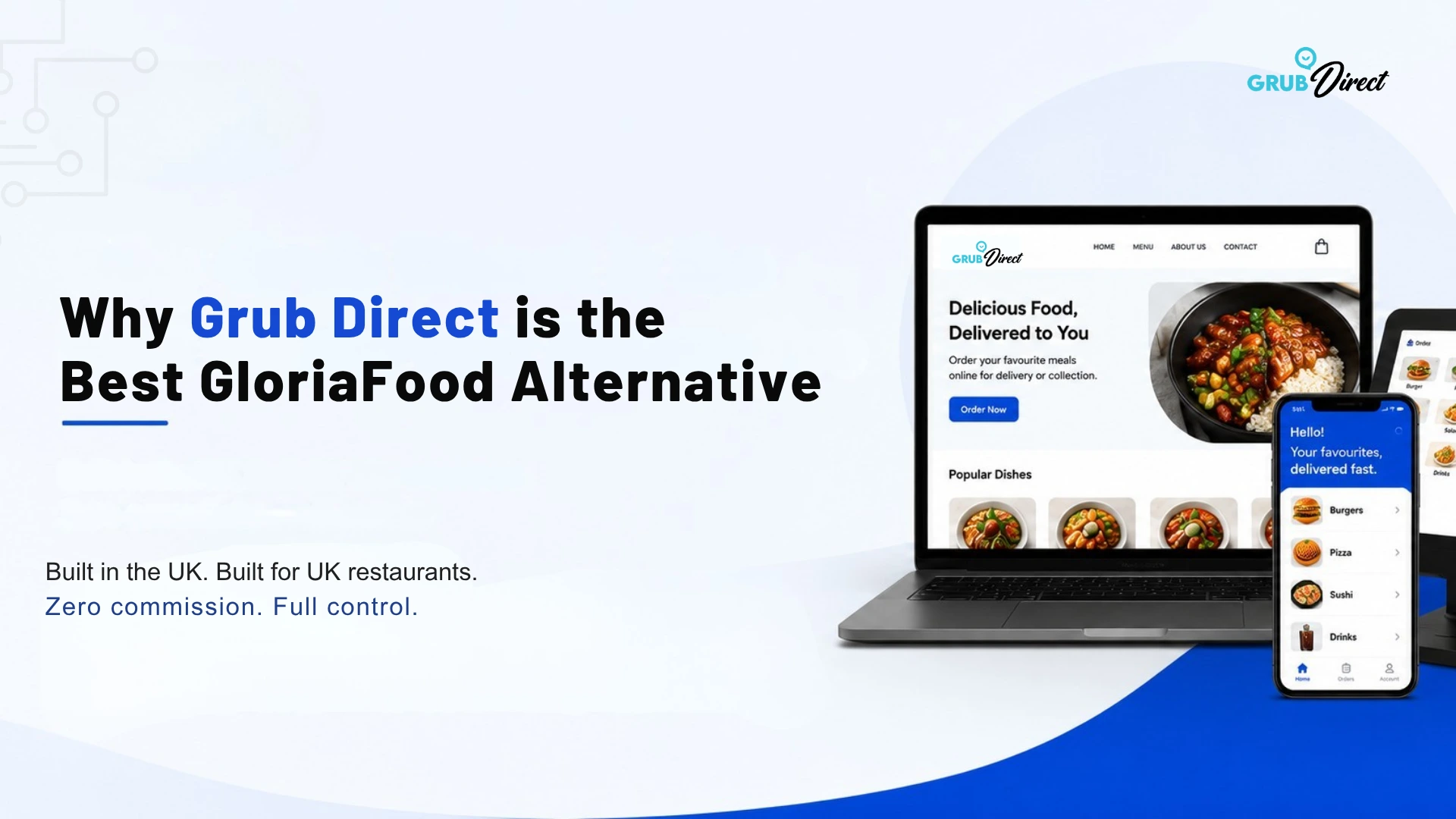
On one hand, ordering through services like Just Eat, Uber Eats and Deliveroo gets you visible to customers almost immediately. Direct orders, on the other hand, are the orders that your customers will place directly from your website. Both work. But they do not work the same way. And if you are building a long-term strategy, understanding the difference between third-party platforms and a direct ordering system like Grub Direct becomes essential.
Why This Decision Matters More Than Ever in the UK
The UK food delivery space is growing fast. It’s not slowing down either. The UK food delivery market will grow to nearly double its size to £14.8 billion by 2026, according to the Lumina Intelligence Market Report for food delivery in the UK.
That growth sounds promising. But here’s the catch, most of that growth is happening on platforms that charge restaurants a significant cut. Which brings us back to the real question behind In-House Delivery vs. Third-Party Apps: Are you growing your business or just feeding someone else’s platform?
What Third-Party Apps Actually Cost Restaurants
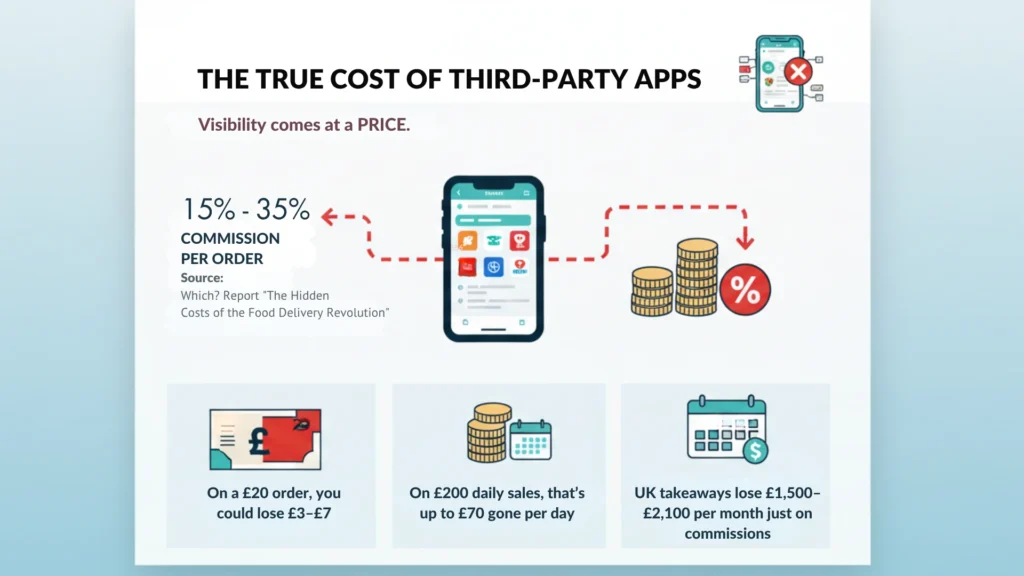
Third-party apps offer visibility. No doubt about that. But they also come with ongoing costs that many restaurants underestimate at first. According to Which? restaurants generally pay between 15% and 35% commission per order, a finding detailed in their report The Hidden Costs of the Food Delivery Revolution.
In effect, this implies:
- On a £20 order, you could lose £3–£7
- On £200 daily sales, that’s up to £70 gone per day
Some UK takeaways lose £1,500–£2,100 per month just on commissions. This is why the conversation around online ordering vs third-party apps is no longer just operational, it’s financial.
Online Ordering: What Changes When You Own the System
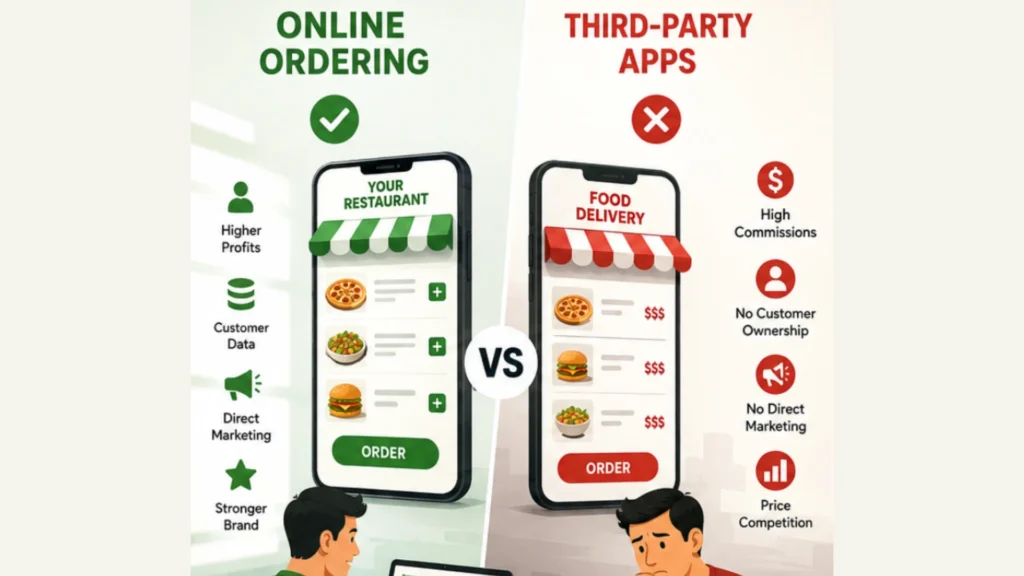
With online ordering, the biggest shift is simple: ownership. You’re not sharing revenue per order. You’re not competing on the same screen as five similar restaurants. And most importantly, you’re not losing your customer relationship.
Instead:
- You control pricing
- You collect customer data
- You can market directly
Many restaurant owners report that customers tend to spend more when ordering directly compared to third party platforms. That’s a strong signal that once trust is built, people prefer going direct.
Online Ordering vs Third-Party Apps: Where the Real Difference Shows
1. Profit Margins
With third-party apps, every order comes with a deduction. Over time, that eats into margins quickly. With online ordering, your cost structure is predictable. That consistency matters, especially with rising food and energy costs in the UK. This is one of the biggest reasons restaurants are rethinking in-house delivery vs. third-party apps
2. Customer Ownership
When someone orders through a third-party app, they’re technically the platform’s customer, not yours. You can’t retarget them. You can’t build loyalty. With online ordering, you can. This is why many restaurants are shifting toward customer retention strategies.
3. Branding & Experience
Third-party apps are designed for comparison. Customers scroll, compare prices, and switch quickly. Direct ordering is different. It’s your environment. Your brand. Your experience. Many restaurant owners underestimate how much this matters.
In-House Delivery vs. Third-Party Apps: Another Layer to Consider
This decision often overlaps with in house delivery vs. third party apps.
In-House Delivery
- More control over service quality
- No delivery commission
- Better customer experience
Third Party Delivery
- Easier to manage
- No staffing required
- Scales quickly
In reality, many UK restaurants now combine both. They deliver the products around their area and use apps in high traffic periods. When it comes to in house delivery versus third party apps, it’s not really about either, it’s about balancing them both.
Real Life Example: A UK Takeaway Shift
Let’s take a practical scenario. A mid-sized takeaway in London was heavily dependent on third-party platforms, around 70% of its orders came through apps.
Before:
- High commission payouts every week
- Limited repeat customers
- Constant competition on price
After introducing direct ordering (via a system like Grub Direct):
- A steady shift of repeat customers ordering directly
- Saved £2,000 to £2,500 monthly on commission
- They reward repeat customers with offers and discounts, bringing them back more consistently.
This isn’t unusual anymore. Similar results have been observed by many restaurants in the UK as they slowly shift towards a hybrid model.
So, Which One Should You Choose?
For those new to the business, third party applications can accelerate built visibility quickly. But if you’re already getting consistent orders, relying entirely on them can hold you back. That’s the real takeaway from online ordering vs third-party apps, it’s not about choosing one forever. It’s about using each one strategically.
The Smarter Approach Most UK Restaurants Are Taking
Instead of picking sides, many restaurants are doing this:
- Use third-party apps to attract new customers
- Encourage repeat customers to order directly
- Gradually reduce commission dependency
This hybrid approach works especially well when supported by systems that make direct ordering simple to manage.
Conclusion
The debate around online ordering vs third-party apps isn’t going away anytime soon. Third-party apps are useful. They bring reach and convenience. But they also come with financial and strategic costs. Online ordering gives you control. Over your revenue, your customers, and your growth. For most UK restaurants, the goal isn’t to eliminate third-party apps. It’s to stop depending on them. Solutions like Grub Direct make it easier to set up a branded ordering system without technical complexity, allowing restaurants to stay in control.
Stop losing a cut on every order, start bringing your customers back to you today with Grub Direct.
FAQS
1. Is online ordering better than third party apps in the UK?
It depends on what you want to achieve. Online orders ensure that better margins are available, while third party apps ensure that there is increased visibility.
2. How much commission do UK delivery apps charge?
The cost of most platforms ranges from 15% to 35% per order, depending on the service and delivery model.
3. What makes in house delivery different from third party applications?
Both options offer advantages and disadvantages. With in house delivery, you’ll have control and possibly lower costs, while third party apps will be more convenient and scalable.
4. Can small restaurants benefit from online ordering?
Yes. Even small restaurants can increase repeat orders and reduce costs with a direct ordering system.
5. Should restaurants stop using third-party apps completely?
Not necessarily. A hybrid strategy is usually the best approach for retention.